Rogers Spring, Nevada: The Free Natural Warm Spring on Lake Mead's Northshore Road
- November 4, 2026
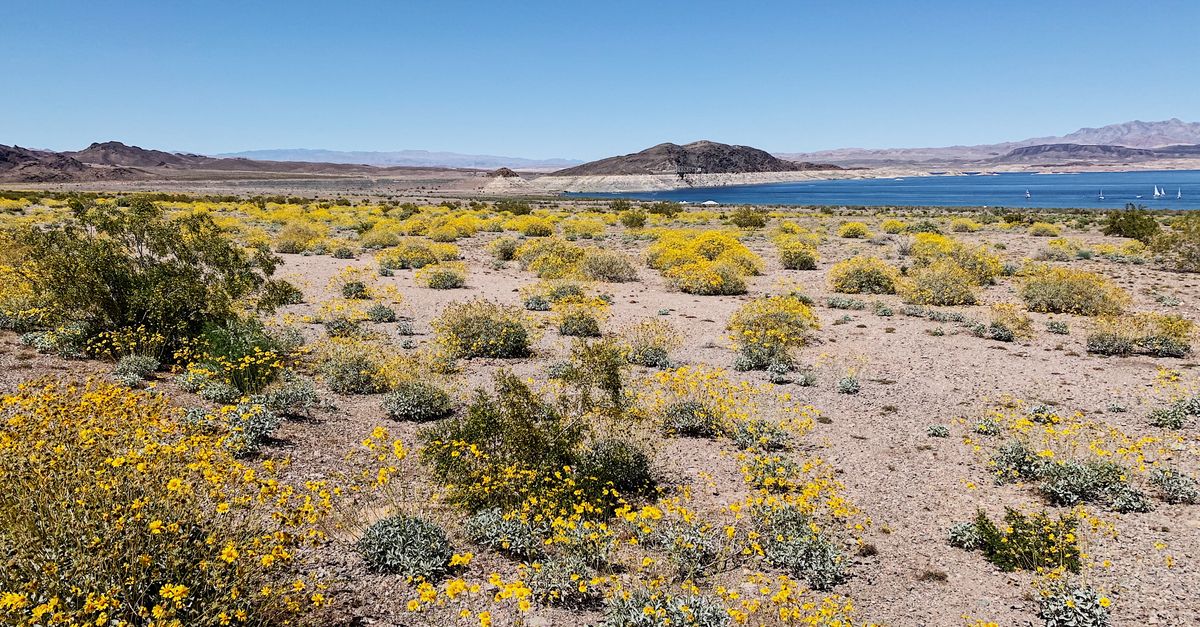
Photo by Solvej Nielsen via Pexels
Rogers Spring is one of the very few natural springs in the Mojave where you can legally get in the water. It sits inside Lake Mead National Recreation Area on Northshore Road (State Route 167), roughly an hour northeast of Las Vegas. A near-constant flow of warm spring water, which the National Park Service puts in the mid-to-upper 80s Fahrenheit year-round, fills a concrete-edged pool shaded by palms. There is no fee for the spring itself; you pay only the recreation area's standard entrance charge, currently $30 per vehicle for a seven-day pass. It is day-use only, with picnic tables, a vault toilet, and water access that most desert springs in Nevada simply don't offer. The one thing to know before you swim: warm freshwater in this region carries a rare but serious amoeba risk, so keep your head above water. More on that below.
The water: ancient, warm, and constant
What makes Rogers Spring worth the drive isn't the pool itself. It's where the water has been. The spring emerges from the regional carbonate-rock aquifer that underlies much of southern Nevada, the same fractured limestone and dolomite system that feeds springs across the Muddy River Valley and Ash Meadows to the west. Rain and snowmelt percolate down through those rocks, warm at depth, then ride faults up to the surface at the base of the Muddy Mountains. Because that underground journey is slow and deep, the water arrives at the same temperature in every season. That's why Rogers Spring feels pleasantly warm in January and almost cool in August, when air temperatures on this stretch of desert routinely exceed 110 degrees.
The water is old. Isotope studies of the regional carbonate aquifer, most famously at Ash Meadows National Wildlife Refuge, date discharged spring water at thousands of years old: precipitation that fell on distant mountains when the climate here was wetter and has been moving through rock ever since. When you soak at Rogers Spring, you are drawing down a very slow bank account, which is also why the spring barely registers drought. Lake Mead's surface can drop a hundred feet and Rogers Spring keeps flowing, because its source is the aquifer, not the reservoir.
That constancy is why the spring matters ecologically. Rogers Spring and neighboring Blue Point Spring, about two miles west, sustain a rare spring-fed wetland in a low desert: cattails, mesquite, cottonwoods, and open water that anchors the wildlife here. Desert bighorn sheep in this part of the recreation area depend on springs like these for water, and the tree canopy turns the site into a migratory stopover. Birders come for species you won't reliably find in the surrounding creosote flats. The outflow from the pool threads south across the wash toward the old shoreline, and depending on the reservoir's level, it may dissipate into the delta before it ever reaches the lake. The spring, meanwhile, predates the reservoir, and it will likely outlast it.
The soak: what it's actually like
The pool at Rogers Spring is unglamorous in the best way. A concrete ring corrals the spring into a roughly circular basin of clear, pale-turquoise water, waist-to-chest deep over a soft bottom, with a spillway at the downstream edge feeding the cattail channel. Fan palms and cottonwoods lean over the water, so nearly every photo of the place looks borrowed from a desert resort rather than a federal recreation area. There are no taps, no structures in the water, no lifeguard, and most weekdays no crowds. You walk a short gravel path from the parking area and you're in.
Be clear about what kind of soak this is. At 86-ish degrees, Rogers Spring is bathtub-warm, not hot. From October through April, which is the right season, the water runs warmer than the air, and the pool steams in the morning while you stand in the sun. In summer the pool is a refuge from the heat rather than a heat source, though the walk from the car to the water is short enough that even a July visit is survivable if you're prepared for the trip back.
I'll give you one image from a February morning: air around 50 degrees, steam lifting off the pool in sheets, and within thirty seconds of stepping in, a dozen thumbnail-sized fish had arrived to inspect my ankles like a committee. That committee is part of the story here, and it deserves its own paragraph.
A pool full of tropical fish
The warm, constant water has made Rogers Spring a survival zone for nonnative fish, almost certainly released from aquariums decades ago. Sailfin mollies and mosquitofish are established here, and surveys and Park Service species records have documented other introduced tropicals, including cichlids, holding on in the spring and its outflow. These fish cannot survive in Lake Mead; the pool is their entire world. That makes Rogers Spring one of the stranger soaking experiences in Nevada. You will be gently nibbled. It's harmless, honestly a little delightful, and it's the clearest signal of how unusual this water is.
Two miles west, Blue Point Spring tells the conservation side of the same story: the Park Service maintains it as a refuge population for the endangered Pahrump poolfish, a species extinct in its native habitat. Either way the lesson is the same. These springs are ecological islands, and everything in them is there on borrowed terms. Watch the fish, don't relocate anything, and leave them where they are.
Planning your visit: fees, hours, and how to get there
Rogers Spring is a day-use area within Lake Mead National Recreation Area, open during park hours, and the logistics are simple. From Las Vegas, take Lake Mead Boulevard or I-15 toward the recreation area's west entrance, connect to Lakeshore Road, and continue onto Northshore Road heading northeast. The signed Rogers Spring turnoff sits roughly twenty miles up Northshore Road from that junction, a few miles past the Blue Point Spring turnoff, and a short gravel spur drops you at the parking area. The total drive from central Las Vegas is about an hour; from Overton and Valley of Fire to the east it's a comparable run in from the other direction, so Rogers Spring makes a natural add-on to a Valley of Fire day.
Entrance to the recreation area is $30 per private vehicle for seven consecutive days, $45 for a Lake Mead annual pass, and interagency federal passes are honored. There is no additional charge, reservation, or permit for the spring. Facilities are minimal and honest: a vault toilet, picnic tables, some shade structures, and trash service you shouldn't rely on. Pack out everything. Camping is not allowed at the spring; if you want to stay overnight, use the recreation area's developed campgrounds, such as those toward Callville Bay and Echo Bay, dispersed shoreline camping where the Park Service permits it, or the motels and RV parks in Overton and the Moapa Valley.
Timing is the difference between a great visit and a punishing one. October through April is the window: winter days in the 60s and low 70s make the warm water feel earned, and the pool actually steams. Summer visits are possible early or late in the day, but this is low desert. Carry far more water than feels reasonable, because cell coverage along Northshore Road is spotty and help is not close.
Read this before you get in: amoebas, heat, and a fragile oasis
The safety issue at Rogers Spring is Naegleria fowleri, the so-called brain-eating amoeba. Naegleria lives in warm freshwater and soil across the southern United States and multiplies in the temperature range Rogers Spring occupies. Infection is rare but almost always fatal, and the amoeba enters through the nose, not the mouth or skin. In 2022, the Southern Nevada Health District confirmed a Naegleria fowleri death in a Clark County resident with likely exposure at Lake Mead. The practical guidance from the CDC is simple: keep your head above water, use nose clips if you plan to submerge, and avoid stirring up the soft bottom sediment, where the amoeba concentrates. Thousands of people swim in this water without incident, but this is the one rule to take seriously. Dogs are allowed in the recreation area on leash; use your judgment about letting them splash.
Treat the water as recreational, not potable: it is untreated spring water, and algal advisories occasionally apply to waters in the recreation area, so check current National Park Service conditions before you go. Beyond that, the etiquette rules are the standard ones for an ecological island: clean, drain, and dry anything that's touched other water bodies to avoid transporting invasives, don't move fish or plants, stay on established paths through the wetland, and pack out trash. The spring has been running since long before Lake Mead existed, and the wetland it feeds is rarer in this desert than almost anything you'll photograph. Treat it accordingly, and it'll still be there the next time you come back down Northshore Road: 86 degrees, palm-shaded, and full of curious mollies.